Welcome to Your Historical Compass

"The purpose of this blog is to generate discussions about historical issues. Students, enthusiasts, and friends are all welcome to join by reading and participating with comments. I hope to generate interest in history and offer help to the perplexed." Caleb Johnson

Friday, January 27, 2012

A Return to Russia Pt.1


In one of the first of this blog’s posts, we discussed Russian Literature. In this post, we’ll discuss Russia’s early history.

Winston Churchill once described Russia as “a riddle wrapped in a mystery inside an enigma.” Here Churchill expresses the vastness and complexity of a seemingly esoteric land. As we look at it on a map, Russia provides a big series of questions, but no answers. Questions like; how did it get there, what do its people believe, how do they live and so on. I do not intend to answer all or any of these questions in this post, that would take an entire blog in and of itself, rather I hope to get the reader started on a path of exploration. Here we go.
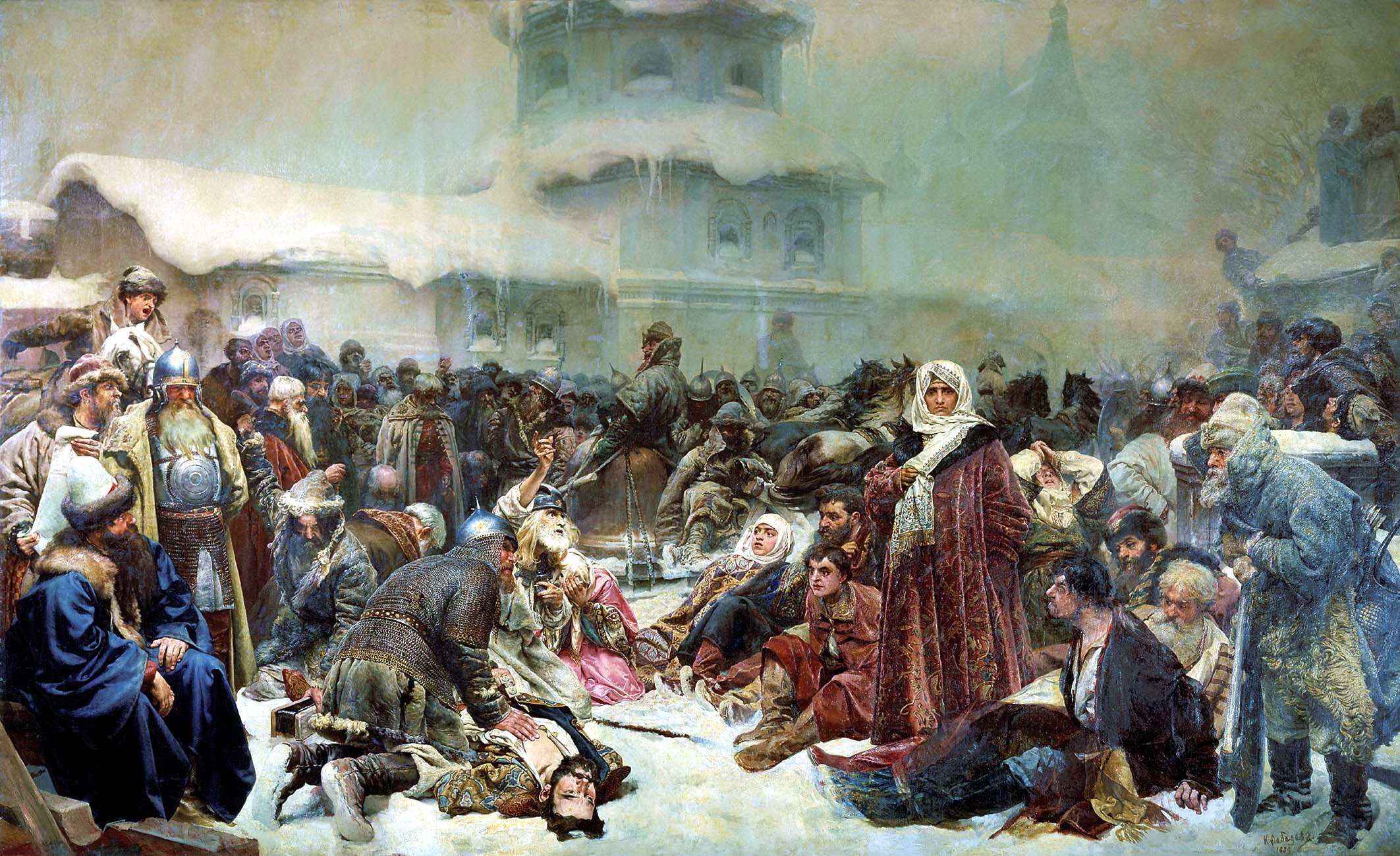
Medieval Novgorod 
Surprisingly, the first chapter in modern Russian history doesn’t begin with Slaves, but Swedish Vikings. In search for new markets in the east, a group of Swedish Vikings called the Rus moved into the vast Eurasian steppe in the late 8th century. They soon came to dominate the politics of the Slavic cities that sprinkled the frozen steppes between the Baltic and Caspian Seas. Moscovy, Kiev, Novgorod grew into trading centers between the major Medieval metropolises of Baghdad, Constantinople and the Northern Scandinavian trade cities. As their presence became apparent to the Byzantines, Emperor Michael III sent a missionary named Cyril to convert the Slaves to the North in 860AD. Know as the Apostle to the Slaves, Cyril not only converted thousands to Christianity, but gave them a Bible in their own language for which Cyril developed an entirely new alphabet, the Cyrillic script.

Once the Byzantines established a relationship with the Slavic Princes to the North, the Russians came to identify themselves with the Greek Orthodoxy based in Constantinople rather than Catholicism which was based in Rome. This divide between the two churches would affect Russia long after Constantinople fell to the Ottomans and the Protestant Reformation rocked Europe. Isolation became the policy for Russia as the long winters dissuaded passage across the steppes. Alone and secluded, Russia seemed to be in a period of hibernation asleep and content to be. Yet Europe beckoned and try as they may, the forces of the old order could hold back the clock no longer.

To be continued.

Friday, January 20, 2012

The Minoans


If you travel to the Island of Crete and explore the countryside, you can find the remains of an old palace complex called Knossos. Knossos was the once-capital of the ancient civilization of the Minoans. The Minoans were the people who inhabited the Aegean Islands during the 3rd and 2nd millennia BC. Their name comes from the Greek legend of their King Minos. Minos is the king who is said to have kept the Minotaur in a labyrinth under his palace. But there was more to these people than myth.
Palace Knossos

Minoan trading Vessel
The Minoans were a well organized people who effectively consolidated their control over the Aegean Sea. This control allowed for the flourishing of pan-Aegean trade that brought the Minoans great prosperity. They built large cities and had a well ordered and sophisticated society. Minoan palaces seem to have served more as a community centre than exclusively royal residences. The palace at Knossos covered more than 500 sq. ft. and had multiple stories. The ruins of large storage facilities and granaries stand next to private chambers decorated by beautiful frescos, hinting that the Minoans were people of taste as well as business. Although Minoan dominance of the Aegean area lasted for many centuries, it did eventually come to an end.

The end of the Minoan civilization started with a series of earthquakes and invasions that shook the Aegean world. Sometime around 1450 BC, the caldera underneath the Minoan Island of Thera erupted. Most of the island disappeared, and the column of ash and smoke could be seen as far away as Egypt. After the devastating effects of the eruption on the surrounding islands and peoples, the Minoans slipped into decline. The end came when the main island of Crete was invaded by a new power, the Mycenaeans. What we know of the Minoans comes from archaeology as the eruptions which destroyed the civilization also encased its cities in the molten ash. Many buildings were preserved, much like the Roman Pompeii, and are now subject to the scrutiny of modern historians. Although they seem to have left no permanent mark on history, their sudden end should serve as a reminder that all societies are only temporary.

Saturday, January 14, 2012

Modern Monarchies

In today’s world of Democracy and popular government, the concept of Monarchy seems to be an ancient vestige of a forgotten age. Councils, Parliaments and Congresses run a state’s affairs and hereditary titles have been banned in many countries around the world. However, there do remain a few nations that have a Monarchy as part of their government. Whether the monarch is just a figurehead with no practical power, or indeed the head of the government, monarchy has survived the turn of the millennium and shows no sign of passing away.
Queen Elizabeth II of Great Britain


Perhaps the most familiar example is that of Great Britain. Although the country is run by a Parliament, the royal family, currently the house of Windsor, remains an important symbol in the hearts and minds of the British people. Other monarchies on the continent of Europe include Spain, Netherlands, Sweden, and Monaco. In Japan, the current Emperor Akihito is still very popular with his subjects. In fact, the survival of the imperial office was the one condition on which the Imperial forces surrendered at the end of World War II.  Interestingly, Thailand’s King Bhumibol Adulyadej is currently the world’s richest monarch.

Queen Beatrix of the United Netherlands
Whatever people may say about democracy and popular government, the idea of royalty and castles still captures the popular imagination. Although most of them cannot command armies, levy taxes, or actually rule their subjects, royal families and their images remain very modern institutions.

King Bhumibol Adulyadej of Thailand

Friday, January 6, 2012

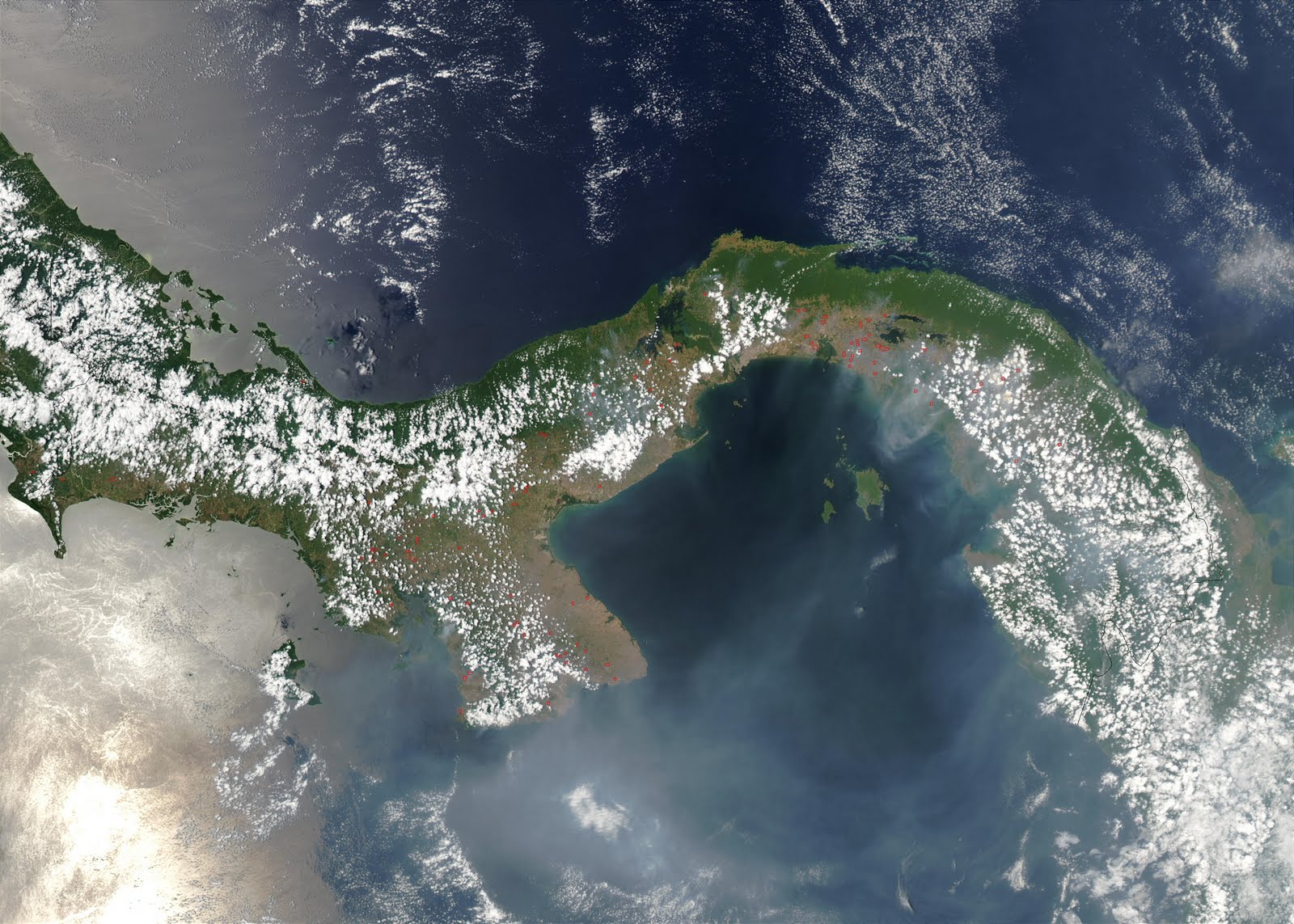
Panama Canal


In a past post, I discussed the idea of geopolitics. That is, certain aspects of geography lend strategic advantages to whichever country possesses them. One of the best examples of such a geographical location is the Panama Canal.

Completed in 1914, the Panama Canal connected the Atlantic and Pacific Oceans. This 48 mile man-made waterway accommodates over 14,000 vessels every year. The canal allows for ships in either ocean to get to the other without circling Tierra Del Fuego in South America. This saves the ships nearly 8,000 miles and drastically cuts costs for transoceanic voyages. These facts make this little strip of land quite valuable. Any power that controls the canal can exact tolls for ships to pass and can block any ships it doesn’t want to pass.


The United States was the power that first built and controlled the canal with permission of the Panamanian government. It was a great asset during both World Wars and was incredibly valuable for ships going from New York to San Francisco. In 1999, the US government handed over complete control to the Government of Panama, but US businessmen still hold a large portion of the stock for the canal. As long as there is need for transoceanic trade between the Atlantic and Pacific, the Panama Canal will remain a key geopolitical item.

Saturday, December 31, 2011

The Ottoman Empire and the Modern Middle East Pt.2

Welcome back. In our last post, we looked at the early history of the Ottoman Empire and how it rose to power. We saw how the empire declined after the battle of Lepanto, and how it made an effort in the early 20th century to reassert itself through the first world war. Let us now discuss the war and aftermath.
World War I Alliances
When World War I broke out, the Ottoman Empire sided with the central powers, namely Austria-Hungary, and Germany. Although this came as a surprise to the British and French, some might have seen it coming. The Ottomans had by this time had a long relationship with Germany. German engineers and manufacturers had helped the empire break into the industrial revolution. German military officers had been influential in mechanising the empire's armies. There was even talk of a great Berlin to Baghdad railway. One other major factor, was that the allied powers (Britain, France and Russia) had more territory that the Ottomans wanted to conquer than the central powers. Britain had taken Egypt from the empire and Russia had always looked at the city of Istanbul with a hungry eye. From a territorial perspective, the central powers were the obvious choice.

T.E. Lawrence
At the beginning of the war, Germany sent military advisers to the Ottomans and many German generals actually commanded Ottoman armies. A fierce campaign was waged in the north as the Ottomans and Russians battled over the Caucasus, but after the Communist revolution of 1917, that front quieted down. The most action was seen in the South where the British launched attacks from their bases in Egypt and India. After hard fighting, the British eventually took Baghdad, and secured the flow of Iraqi oil for the allies. Perhaps the most romantic episode, in an otherwise bleak and desolate war, occurred in the Arabian peninsula when a British captain named T.E. Lawrence inspired the Arabs to revolt against their Turkish overlords and wreak havoc on the empire. Lawrence helped the main British forces in Egypt by destroying Turkish railways, bridges, and communications. The British took Jerusalem in 1917, and when Damascus fell in 1918, the Ottoman government surrendered to the Allies.

What followed was a division of the Ottoman Empire by the allied countries of Britain and France. These countries received mandates from the newly created League of Nations to govern the Middle East. Britain got Palestine (Israel), Iraq, and Arabia. France got the Lebanon, and Syria. Very soon the native Arabs of these countries grew impatient with the Europeans. During the British mandate of Palestine, a large number of Jewish immigrants started to arrive and build their own communities. This trend was increased during and after World War II as the Nazis expelled and persecuted the Jewish people. Eventually the British relented to international pressure and relinquished its control of Palestine and turned the matter over to the newly formed United Nations. The UN divided Palestine between the Arab and Jewish peoples with Jerusalem as an international city. Needless to say, the partition didn't last long. After a fierce war of independence, the Jewish (now called Israelis) people formed the modern state of Israel. The tension between this state and the Arab states surrounding it has been the source of much, though not all, of the tension of the Middle East.

Modern Middle East

Although the regions of the Middle East have large reserves of natural resources and labor pools, the area remains poor due to the instability caused by internal as well as external strife. None of the Arab countries can fully accept the Jewish state of Israel. All of the countries in the region have tense relations with some, if not all of their neighbors. Corrupt and despotic regimes control most of the countries which causes great suffering for the inhabitants and retardation of their economies. Indeed, much of the money that the Middle Eastern countries make, come from petroleum exports. For countries with no petroleum, such as Lebanon and Jordan, the economies remain even smaller. With such a history, peace seems far and elusive for the Middle East. The way that the region went from such glory and riches at the height of the Ottoman empire, to the division and poverty of the current times should serve as a lesson for other countries to study and learn.

Sunday, December 25, 2011

Merry Christmas

Dear readers,
I wish you all a Merry Christmas, and a Happy New Year. The next post will be on the 31st.

Friday, December 16, 2011

The Ottoman Empire and the Modern Middle East Pt. 1


Much discussion has arisen about the Middle East, and how it became the way it is. How the modern borders were drawn, why the area seems rife with conflict. These things can, in many ways, be summed up in one phrase: The Ottoman Empire.

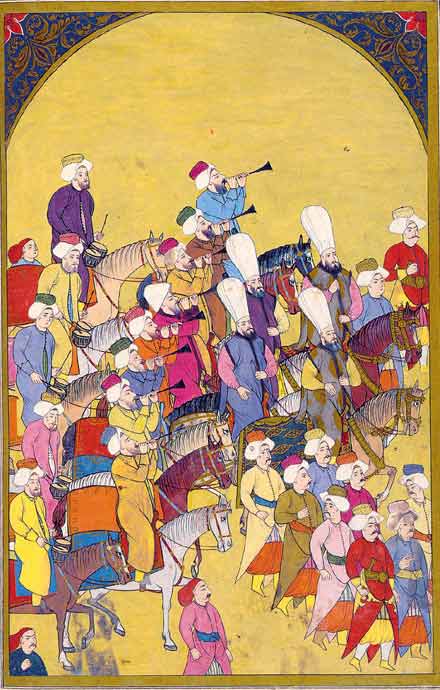
Ottoman Empire at its Height
The Ottoman Turks were a nomadic tribe that migrated to the west in the early middle ages. They settled in modern day Turkey -Turkey meaning land of the Turks- outside of the Byzantine capital of Constantinople. After centuries of conflict with the Byzantines, the Ottomans conquered the Byzantines and changed the name of the capital from Constantinople to Istanbul. From there, the Ottomans expanded their empire into the Middle East and Europe, conquering much of the Balkans and even laying siege to Vienna twice. They moved east and conquered Egypt, Palestine, Syria, Iraq, and the Arabian Peninsula. At its height, the Ottoman Empire was the most powerful state in the western hemisphere. The Empire was a very autocratic state run by the Sultan and a group of administrators, or Pashas. This autocracy had the effect of tying the prosperity of the empire to the Sultan himself. If the Sultan was strong and wise, then the empire would prosper and expand. If the Sultan was weak, then the empire tended to fall into decline.

A significant event occurred when a league of European kings and princes formed an armada to curb the growing power of the Turkish navy. At the battle of Lepanto 1571, the European naval forces heavily defeated the Turkish navy and altered the path of the Empire as a whole. From that date the Empire fell into significant decline and was know by other nations as "the sick man of Europe." By the end of the 19th century, the Ottoman Empire had fallen behind Europe in the industrial revolution and had seen the British, Russian, Italian, and French nations pick away various parts of the empire. Indeed, the only reason the empire lasted so long was that the French and British could not see the Russians in control of Constantinople.  However, at the beginning of the 20th century, the empire made one last attempt to reassert itself and regain some of its former glory. In 1914, it joined World War I on the side of Germany and Austria. Whether they lost or won, the Ottomans had tied the fate of their empire to the outcome of the war.

Next week's post will feature part 2 of this series and will relate the events that followed the beginning of World War I.