Wednesday, May 23, 2012
The Familial Exploits of the d’Hauteville Brothers
We are all familiar with the illustrious exploits of William, Duke of Normandy, who conquered the main Island of Britain in 1066. But before their conquest of England, the Normans had already established themselves as a dynamic and mobile force in 11th century Europe. One family in particular distinguished themselves as leaders, explorers and conquerors, they were the d’Hautevilles.
The custom of primogeniture was not kind to the eleven younger sons of Tancred d’Hauteville. His petty estate was left to the eldest son and the younger brothers were obliged to look abroad in order to secure their fortune. The first to leave France was William, one of the older brothers. He was enticed by news that the Byzantine Empire was planning the recapture of the Island of Sicily. He took part in the campaign, leading a contingent of Normans to fight alongside the Byzantines. He proved himself in battle and gained the nickname Ironside for his massive strength. The exploits of William Ironside encouraged his brothers and other Normans to seek their fortunes in the central Mediterranean. Eventually Robert, called Guiscard for his craftiness, was able to conquer the whole of southern Italy with a capital at Naples. He harbored ambitions for the conquest of the Byzantine Empire itself, but was foiled in these plans when the Byzantines paid the Venetians to destroy his naval capacity. Despite this setback, the conquests continued.
Upon the death of Robert Guiscard, his brother Roger attempted the conquest of Sicily. The aborted Byzantine campaign left the Island in chaos and ripe for conquest. Roger was able to subdue the island and was granted the title “King of the two Sicilies” by the Pope. Robert Guiscard’s son Bohomond found himself cheated out of an inheritance, so he continued the familial practice of conquest abroad. He ended up joining the first crusade to Jerusalem and in the process swore allegiance to the same Emperor his father had warred against. He eventually captured the Biblical city of Antioch and founded his own principality.
Thus the d’Hautevilles had spread their legacy from Normandy to Sicily, Naples, Constantinople, and Antioch. It is a wonder that one family could have shaped the setting of Medieval Mediterranean politics, but they did. It is perhaps a testimony of the confusion of the times and a tribute to the Norman strength of arms. The legacy of the d’Hauteville brothers doesn’t directly affect us today, but Medieval Europe was certainly altered by their dynamic ambitions.


Saturday, May 5, 2012
Florence, Birthplace of the Renaissance

The Mona Lisa, St. Peter’s Basilica, the Birth of Venus,
Ghiberti’s Gates of Paradise. All these
great works of art and architecture remind us of the Renaissance. Their forms
and beauty speak of an older age when tradition was shaken off and ancient
ideas were being reborn to form new thoughts. Surprisingly, these pieces all
have one thing in common, which is Florence, Italy. Whether a native artist or
architect, or a structure that still graces the city, Florence has left its
mark on the Renaissance. Why Florence? What forces of nature or chance or Providence
selected this city in the heart of Tuscany to be where greatness occurred?
 |
| The Gates of Paradise |
Florence, like many of the other Italian city-states,
benefited from the struggle between the papacy and the Holy Roman Empire.
Neither faction could bear to see northern Italy in the other’s control, so the
cities in Tuscany and the Po River Valley were able to develop
independently. They formed city-state
republics not unlike the ancient Greek polis. Florence was, like the other
cities, a textile and trade center. Raw materials came in from the east or
north and then were processed by the skilled artisans and craftsmen into fashionable
cloth, tools, etc. This economic climate fostered a banking industry that was
controlled by a few powerful families. The wealthiest of these families, the
Medici, was headed by one of the central political figures of the early
Renaissance, Lorenzo deMedici. Lorenzo, in addition to having an interest in
politics and finance, had an eye for the fine arts. He built an art studio in
one of his palace and patronized some of the leading names of the age, such as
da Vinci, Botticelli, and Michelangelo. It was to the patronage of Lorenzo and
others like him that such great artists owed their gratitude.

The crowning splendor
of Florence is the orange dome that tops the Cathedral. At the time of its
design, the dome was considered a mathematical impossibility, but its secret
was mastered by the architect Brunelleschi. Compelled by the city authorities
to solve the problem of the dome, Brunelleschi traveled south to study one of
the Caesars’ lasting legacies, the Pantheon of Rome. Wrapped in mystery, the
Pantheon taunted Brunelleschi to discover the secret of its design. Eventually,
Brunelleschi determined that in order to construct a dome of this size, each
layer had to be artificially propped up by wooden scaffolds until a keystone
ring could be placed at the top to assume the stress. Once this was done, the
stress of each layer could be handed down to the next and finally to the base. Although
his competitors mocked his efforts, Brunelleschi’s solution was ingenious.
While the focus of the Renaissance eventually shifted to
Rome, Florence remained proud of its achievements and its sons. The way that
Michelangelo and da’Vinci changed art from two dimensional to three dimensional
in both painting and sculpting broke the Medieval patterns and started a new
path for future artists. Today, thousands flock to see the marvelous works that
still grace the city, and Florence remains one of Italy’s most treasured centers
of attraction.
Sunday, April 22, 2012
Byzantium

Everyone has some concept of the Fall of Rome to the Germanic barbarians during the 5-6 centuries. But did the empire completely disappear? The answer is no. While the great cities of the west fell to ruin and their roads decayed and fell apart, in the East, the empire survived.
 |
| The Fall of the West |
It was perhaps strategic intuition that compelled Constantine the Great to move the administration of the empire away from Rome to a small fishing village on the Bosporus Straits called Byzantium. The first thing Constantine did was change the city’s name to Constantinople. Situated on a peninsula, Constantinople was in an excellent position to defend itself from attack by the land. In the same way, the fact that it straddled two continents and controlled the trade route between two seas meant that it was a city destined for enormous wealth. It was around this city that the Eastern Roman Empire survived. While the barbarian hoards swept across the defenseless cities of the west, these same armies were continuously rebuffed by the double walls of Constantine’s city. This allowed the culture of the Romans to survive for a thousand years after Rome fell. To help historians differentiate the old Roman Empire from the Eastern, they called the Eastern Empire the Byzantine Empire after the original name of Constantinople. However, these Romans never forgot they were Romans. Even after the medieval kingdoms of the West had established themselves, the Byzantines called these invaders “Celts.” Despite their legacy, wealth, position, and influence, not even the Byzantine Empire could last forever.
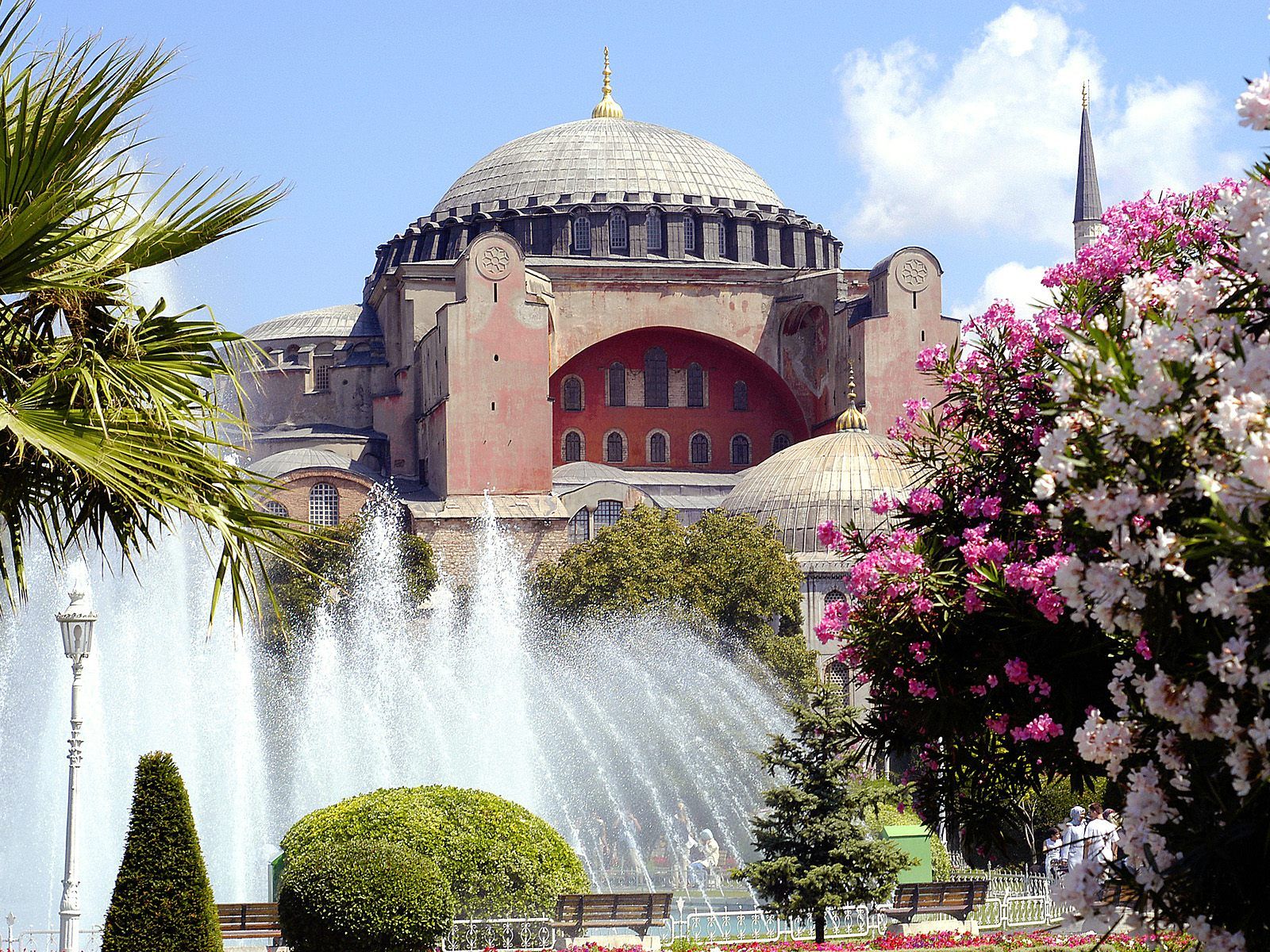
The end came for Byzantium in 1453 when, after numerous attempts, the Sultan Mahomet II conquered the city and renamed it Istanbul. Today it is Turkey’s largest city and a UNESCO World Heritage site. Even though it no longer serves the Caesars, Istanbul remains a city that straddles two continents and seems to bring together the two worlds of east and west, old and new.

Saturday, April 14, 2012
Ireland
Cold, remote and small, Ireland is a land where history abounds, but one which history has largely forgotten. As it lies on the fringes of the European continent, Ireland must strain to even gain mention. Indeed the island has been dominated by its western neighbor for nearly a millennium. But it was not always this way.

During the fall of the Roman Empire, Ireland remained untouched by the subsequent Germanic invasions that swept the continent and ravaged what was left of Rome’s imperial glory. Some Roman citizens even fled to Ireland’s shores, but some were taken there by force. One such captive, St. Patrick, would have a profound impact on not just Irish history, but European as well. St. Patrick was the main force in the conversion of the pagan tribes to Christianity. Once Ireland was united under the Christian faith, monasteries sprang up and supplied the forum for the last remaining news medium. One of the many practices at Irish monasteries was the transcribing of texts, sacred and secular. What they did was take old Roman texts that were written on papyri and transcribe them on parchment, which is made of animal skin. Parchment, unlike papyri, does not dissolve over a long period of time. Thus, the Irish monks were responsible for preserving many ancient documents that would have been lost simply to the detritus of time.

Yet this was not Ireland’s only legacy. Well before Pope Gregory the Great sent St. Augustine to Kent to reconvert the pagan Angles and Saxons, Ireland was well on its way to completing the conversion of the tribes. When Latin and Irish (or Celtic) clerics met at the end of their missions, there was a union of the two churches. So although time seems to have passed that westward island on the edge of Europe, its relics and its people remain a testimony to the accomplishments of ages past.
Saturday, April 7, 2012
Alexandria

In 332 BC, Alexander the Great liberated the land of Egypt from the Persian Empire. Compelled by the flattery of the Egyptian people and perhaps a sense of his own need for immortality, Alexander decided to leave a permanent legacy in Egypt: a city at the end of the Nile Delta. This city would naturally bear his name as had the many other cities he had started along his invasion route. While the Greek surveyors lined out the streets by spreading grains of wheat, local birds flocked to eat it up. Interpreting this as a bad omen, Alexander nearly gave up the project altogether, but his skillful soothsayers convinced him that the omen was not bad but good. They interpreted to him that the way the birds were fed by the seeds, so would millions be fed by this city.
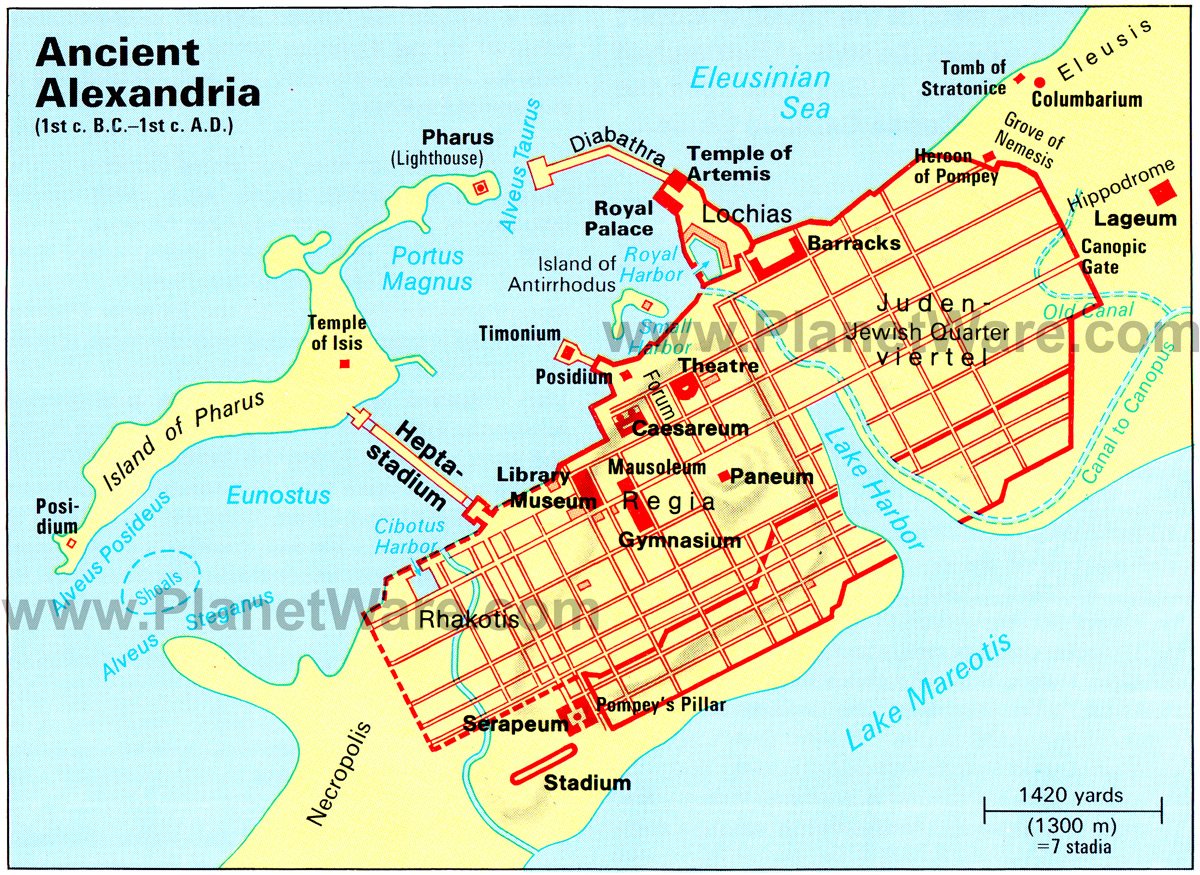
Indeed, the prophecy proved true. Although Alexander never lived to see the city completed, Alexandria and Egypt were passed on to Alexander’s friend and general, Ptolemy. Under Ptolemy and his successors, Alexandria grew and thrived. The streets were designed to be parallel with the winds from the Northern Mediterranean so that the city could breathe in fresh air during the long summers. Built on a natural harbor, Alexandria became the leading port city of the Eastern Mediterranean and even began to rival Punic Carthage in the West. A private investor built a great lighthouse to guide the ships coming into the new Harbor of the Pharaohs. The Ptolemy dynasty sponsored a state library to house all the records from the known world. This library came to be the greatest collection of scrolls and documents to that date and wouldn’t be equaled until the founding of the Vatican Library. Such a magnificent metropolis could not but help getting into the political arena. Although the Ptolemies were able to skillfully play off the various factions that were left in the wake of Alexander’s conquests, they were forced to reckon with a new rising power in the West.

When Rome defeated Carthage in the 3rd Punic War, it was drawn into the politics of the East when it had to fight a number of defensive wars against the Greeks. When the King of Pergamum bequeathed his kingdom in Asia Minor to Rome, the Ptolemies recognized where the wind was blowing. In the 1st century BC, Ptolemy XII asked Rome to mediate the succession of his throne. These events led to further entanglement between Rome and Egypt, because Ptomely’s successor was Cleopatra VII, who married Julius Caesar and later Marc Antony. Alexandria might have become the second capital of the Mediterranean world had its chance not been squandered by the star-eyed lovers Antony and Cleopatra. Once Caesar Augustus defeated Antony and Cleopatra at the battle of Actium and incorporated Egypt into the Roman Empire, Alexandria became the second largest city next to Rome. Although it never dominated the political landscape, Alexandria continued to be a centre of learning, culture, and wealth. Ever a jewel to whomever possessed it, Alexandria passed from nation to nation but it continues to bear the name of its original founder.
Saturday, March 10, 2012
Egypt: Lost & Found

Everyone today knows of the Pyramids and Sphinx of Giza, as well as other landmarks of ancient Egypt. Hollywood has made numerous films based on Egypt, and MGM’s Luxor Palace is one of Las Vegas’ most popular attractions. Surprisingly, though, our knowledge of Egypt and particularly ancient Egypt is a fairly recent phenomenon. The beginning of what’s now called Egyptology began not with a research study, but with a minor campaign in the French Revolutionary Wars.

When Napoleon Bonaparte sailed into Alexandria and defeated the local forces of the Egyptian Mamluks at the Battle of the Pyramids, he brought with him several French architects and scholars. Spurred by the Enlightenment thirst for classical history, the French started exploring the ruins that were left behind by the pharaohs and forgotten by the sands of time. However, observe as they might, the massive structures that spotted the Nile River Valley seemed to hold more secrets than answers. Who built these structures? How did the people live? Only scraps of knowledge remained from medieval writers and some from the ancients, but to really understand the land, the new scholars would have to decipher the pictographs that decorated the walls of the temples and tombs.

 This was made possible when French engineers excavated a dark stone in the village of Rosetta in 1803. The stone included three types of script: Ancient Greek, Ancient Demotic and Hieroglyphic. The task at hand was to use knowledge of the ancient Greek text to decode the Hieroglyphics and thus unlock the mysteries of the pharaohs. It took scholars twenty years to be able to competently understand Hieroglyphics but the result was a huge leap for Egyptology. Now that we are able to read Hieroglyphics, we are able to understand much of that civilization that was once described by Herodotus as “the gift of the Nile.”
Saturday, March 3, 2012
American Industrialism

Although we live in a time of suburbs, renewable energy sources and a largely service-based economy, America used to be the world’s leading manufacturer. General Motors, US Steel, Standard Oil, and the B&O Railway all represent a time when American industrialism was at its height. But how did it all get started? Why was America able to dominate global industry? What events took place that led America to the forefront? The answer lies in the past.
 |
| Andrew Jackson Captures New Orleans |
When the industrial revolution hit America in the early 1800’s, the water-powered mill industry sprang up among the many rivers that thread the New England hinterland. Fostered by high tariffs, the industry grew despite attempts by foreign nations to flood the market with cheap goods. Vast natural resources were unleashed when the United States captured New Orleans in 1812, opening up the expansive Mississippi River valley to exploitation. In 1825, the Erie Canal opened, linking the Great Lake economies of Chicago and Detroit to the Atlantic Ocean through New York City. American industrialism was on the rise, but it met an unexpected boost through a traditional destroyer-war.
 |
| Ford's Model T |
While America’s Civil War killed over 600,000 men and damaged over $100,000,000 of the nation’s southern economy, it acted as a catalyst for northern industry. Factories made cannons, steel ships, locomotive engines and uniforms for the Federal army. By the war’s end, the northern economy was better than when it started. Due to war and famine in Europe, immigrants flocked to the western Atlantic seaboard, eager to share in peace and prosperity. Large cities grew larger and factories were supplied with cheap labor and ready markets. This advent of urbanization and massive immigration resulted in social unrest and the rise of labor unions. While most workers involved in the factories lived their lives making little, a few rose by innovation and pure hard work. Andrew Carnegie started out earning $1.20 a week at a factory, but ultimately sold his share of his steel company for $300,000,000. Other captains of industry, such as JD Rockefeller, JP Morgan, Henry Ford, Eli Singer, and James Duke, led America into greatness to match the European powers.
Two reasons the US was able to harness industrialism on such a large scale were population and natural resources. The fact that the US straddles an entire continent and hosts one of the world’s largest populations secures its ability to compete globally due to its mere size. Granted, this subject is much larger than one blog post, but I have attempted to outline the main points. Indeed, I left many issues out for the sake of space and attention, but there are important issues I skipped and pains I didn’t mention. What do you think?
Subscribe to:
Posts (Atom)